
Heads up: this post contains Amazon affiliate links. As an Amazon Associate, Wooden House Books earns a small commission from qualifying purchases, at no extra cost to you. We only recommend books we would put in our own children's hands.
The best picture books about anxiety for kids ages 4–8 give a child a borrowed body for studying a feeling from a safe distance. This list features ten read-aloud favorites: bedtime classics, school-counselor staples, and three Wooden House Books titles. Each one was picked for emotional honesty, age-band fit, and how it actually lands at a kitchen table or a classroom circle.
Why books help kids who worry
Childhood anxiety is more visible in 2026 than it was a decade ago, but it isn't new. According to the U.S. Centers for Disease Control and Prevention, an estimated 9.4% of children ages 3–17 (about 5.8 million kids) had been diagnosed with anxiety in 2016–2019. Pediatricians have reported continued increases since. The rise mostly reflects more families naming what is happening at home and at school.
Picture books help in a quiet, specific way. They do not fix anxiety, and they should not pretend to. They give a child language, a face, and a story for something that otherwise lives only in the body: a tight chest at drop-off, a stomachache before a sleepover, a slow yes-and-no whirl at lights-out. A landmark CASEL meta-analysis of 213 social-emotional learning studies (Durlak et al., 2011) found that students in well-structured SEL programs gained an average of 11 percentile points on academic measures, with parallel improvements on self-reported emotional well-being. Read-aloud time is one of the lowest-friction places those skills land.
How I picked these books
I have built a lesson guide or a printable for every book on this list. Some of them got rewritten more than once when a teacher asked for a fresher version. That is how I know which books actually live in classrooms and which ones look good on a shelf and never come off it.
A book had to clear three bars to make the cut. It had to name the feeling without flattening it. There had to be room for the child to reach a different conclusion than the author intended. And it had to read aloud well at 8 p.m. on a Tuesday, when no one has the patience for a long arc.
I left out books that solve anxiety with a single deep breath, and books that frame an anxious child as a problem the adult is going to fix. The titles below treat worry as information: sometimes useful, sometimes loud, sometimes wrong, never bad. Three of them are Wooden House Books. The other seven are not. The Wooden House titles are linked. Search the rest by name.
[QUOTE TO BE SOURCED. Replace before publishing. Suggested sources: a school counselor (ASCA), a child psychologist (one of the educational child psychologists who co-authored the Wooden House Worries, Family Changes, or Sensitivity titles is a natural fit), or an NAEYC-affiliated educator. Aim for one to two sentences on why picture books support anxiety regulation in early childhood.]
Ten picture books about anxiety, ranked by how kids actually use them

1. Wemberly Worried
The patron saint of every child who arrives at the first day of school clutching a stuffed animal and a list of concerns. Wemberly worries about the spot on the rug, about the snack, about whether her teacher will know her name. Then she meets another child who also worries. The worries do not vanish. They get smaller because they are shared.
Henkes treats worry as a temperament rather than a diagnosis. The book never tells a child to stop worrying. It tells the child that worriers find each other. That is the gentler promise. The watercolor mouse art and the deadpan worry-list ("Will she even know my name?") do most of the heavy lifting.
Caveat: This is a quiet book. A high-energy group at storytime may need you to lean into the worry list as a call-and-response.
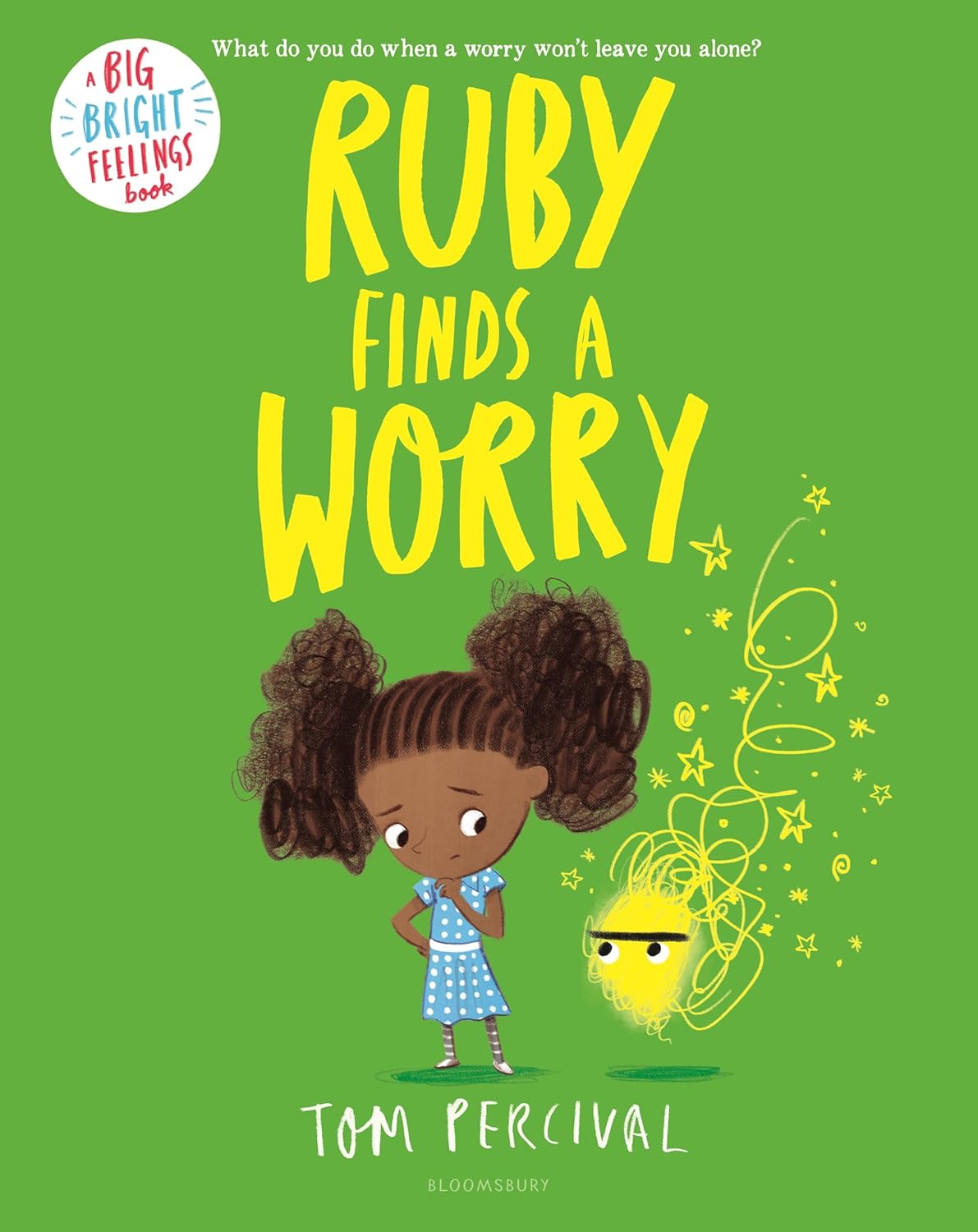
2. Ruby Finds a Worry
Part of Percival's Big Bright Feelings series. Ruby is a happy kid until a small yellow blob, her Worry, appears one day. The Worry follows her, gets bigger when she ignores it, and shrinks only when she names it out loud to another child who has one of her own.
The visual concept is the gift here. Anxiety, once it has a color and a shape, becomes a thing the child can point at. Teachers I know use this book as a vocabulary anchor: "Where is your Worry today?" becomes a check-in question for the rest of the year. A Junior Library Guild selection on release.
Caveat: The "tell someone" resolution is gentle but a little quick. Pair it with a book that lingers in the messy middle for older readers.

3. The Worrysaurus
A small dinosaur sets out on a perfect picnic, then his stomach starts to flutter with what-ifs. He tries to ignore them, then tries to power through, and finally remembers his memory jar. The jar holds small, real things that have made him happy before, and he reads them out loud until the flutter eases.
The rhyming text is bouncy enough for a wiggly four-year-old, and the memory jar is a portable trick a parent can replicate at home with index cards. The worry is not gone at the end. It quiets. That is the right promise for an anxious child.
Caveat: "Just remember happy things" is one tool out of many. Don't oversell it as a fix.

4. The Kids' Book of WorriesWooden House
Co-written with an educational child psychologist, this is the most directly practical book on the list. It walks a child through what worry feels like in the body, what it tries to do, and a handful of strategies that actually move the needle: naming, drawing, breathing, telling a safe adult. Less story, more guide.
I use it differently than the picture books above. The story books are for the moment of feeling. This one is for the morning after, when a kid is calm enough to look at what happened the day before. It pairs naturally with Wemberly Worried as a one-two: the borrowed body, then the toolkit. Readers' Favorite called it "an invaluable guide for families and educators."
Caveat: At its full length it is not a quick bedtime read. Plan 12 to 15 minutes, or split it across two sessions.

5. Wilma Jean the Worry Machine
The school-counselor classic. Wilma Jean worries so much that she becomes "a worry machine": bedtime worries, school worries, what-if worries. Then her mom helps her sort the worries into ones she can do something about and ones she cannot. The in-my-control / not-in-my-control frame is the central tool the book hands the child.
Counselors keep this book on the shelf because it works in a single 20-minute session. The art is busy and the text leans on capital-letter dialogue, which some adults find loud, but kids respond to it. A parent and teacher tip section in the back is useful for follow-up at home.
Caveat: The visual style is dated and the worry-sort can feel reductive on its own. Stronger with a follow-up conversation than as a stand-alone read.
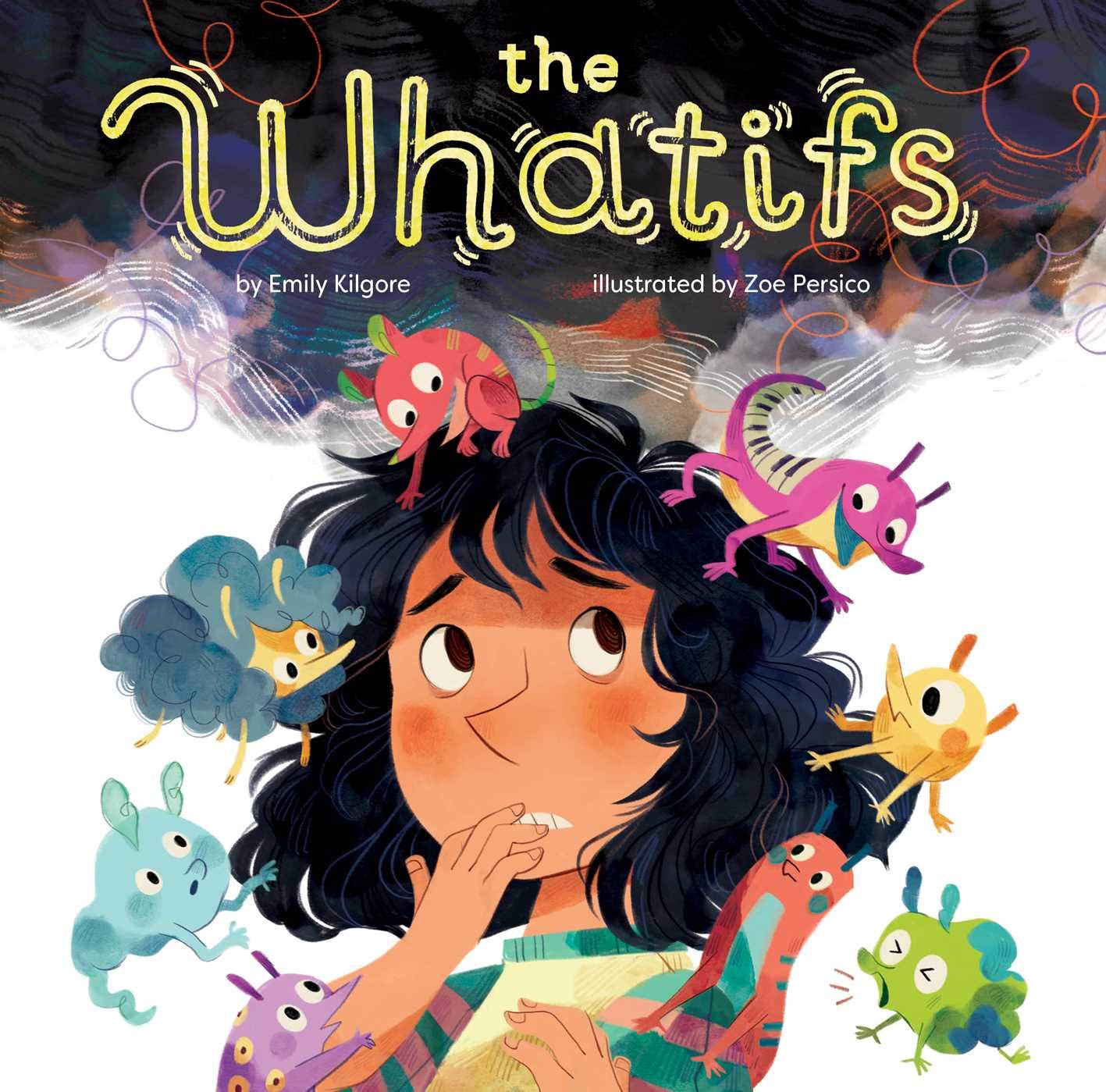
6. The Whatifs
Cora has a piano recital coming up, and a swarm of small creatures called Whatifs has attached itself to her. They whisper: what if I forget the notes, what if I trip, what if everyone laughs. A friend tells her the secret: replace the bad whatifs with good ones. What if I get a standing ovation? What if my piano teacher gives me a hug?
The metaphor is the win. "What if" as the actual shape of anticipatory anxiety lands for kids who cannot yet articulate why they are stuck. Persico's illustrations crowd the page with the Whatifs the way the worries crowd a child's chest.
Caveat: Leans more on cognitive reframing than on body awareness. Pair with a book that names the physical side of anxiety, like The Worrysaurus.

7. The Kids' Book of BraveWooden House
Anxiety often shows up disguised as "I can't." Brave addresses that specific flavor: the child who hesitates, the child who knows the answer but will not raise a hand, the child who cries before swimming lessons. The book treats courage as a quiet, repeatable practice. Adding "yet" to the end of "I can't."
What makes it work is the framing of bravery as a habit rather than a moment. Something small. Something a child can return to on a Tuesday morning. For a child who has read the more intense anxiety books on this list and is still stuck at the doorway of new things, Brave is the next read. Pairs naturally with Ruby Finds a Worry: name the feeling first, then the practice.
Caveat: Leans gentle. A child mid-meltdown will not be ready for it. Save it for calm moments.

8. A Little SPOT of Anxiety
Part of Alber's enormously popular SPOT series. A green spot represents anxiety. The book shows what it looks like, why it shows up, and three simple coping moves: breathing, grounding, and shifting the spot to a calmer color.
The series' strength is accessibility. The vocabulary is concrete, the art is cheerful, the format is bookstore-aisle-friendly. Kids who balk at heavier emotional content often accept the SPOT books because the spot itself is a kind of friend. Used widely in PreK–2 calm-down corners.
Caveat: The resolution skews toward "breathe and switch the spot," which can land as "just calm down" to an older or more skeptical child. Best for the younger end of the age band.

9. The Kids' Book of SensitivityWooden House
Some anxiety in young kids is not anxiety at all. It is the response of a deeply sensitive nervous system to a noisy, fast world. About 15 to 20% of children fit Elaine Aron's clinical description of the highly sensitive child. This book is for them and for the adults who love them.
It reframes sensitivity as a strength and gives a child language for noticing more, feeling more, and needing more recovery time. Literary Titan called it "one of the most empathetic children's books I've come across." I would reach for it when a child's anxiety pattern looks more like overstimulation than worry: meltdowns after birthday parties, refusing to wear certain clothes, asking to leave somewhere loud.
Caveat: Not a fit for every anxious child. If your child's anxiety is more clearly worry-driven (what-ifs, fear of failure), one of the other books on this list will land harder.

10. What to Do When You Worry Too Much
Strictly speaking, this is a workbook rather than a picture book. Every list of children's anxiety resources should still mention it, and ours does. Huebner walks a child through cognitive-behavioral techniques (the worry container, scheduled worry time, gradual exposure) over 80 pages of guided activities.
It is the closest thing to evidence-based at-home anxiety support that exists in trade publishing. Magination Press is the children's imprint of the American Psychological Association, so the techniques are grounded in actual clinical practice rather than vibes. Use it across multiple sessions, not in one sitting.
Caveat: The older end of our age band. Children younger than six will need most of the activities scaffolded heavily. A better fit for parents and counselors than for read-aloud.
At a glance: which book for which moment
| Title | Best for | Reading time | Age sweet spot | Standout feature |
|---|---|---|---|---|
| Wemberly Worried | A worrier-temperament child | 7–9 min | 4–7 | Kindred-spirit ending |
| Ruby Finds a Worry | A specific, nameable worry | 6–8 min | 5–8 | Worry as a yellow blob |
| The Worrysaurus | Lunchbox-sized what-ifs | 5–7 min | 4–7 | Memory-jar coping tool |
| The Kids' Book of Worries | Building a real toolkit | 12–15 min | 5–9 | Co-written with a child psychologist |
| Wilma Jean the Worry Machine | School counseling sessions | 8–10 min | 5–9 | In-control vs. not-in-control sort |
| The Whatifs | Anticipatory "what if" spirals | 5–7 min | 4–7 | Names the loop directly |
| The Kids' Book of Brave | "I can't" hesitation | 10–12 min | 5–8 | Growth mindset without jargon |
| A Little SPOT of Anxiety | Bookstore-aisle entry point | 4–6 min | 4–7 | Color-coded emotion vocab |
| The Kids' Book of Sensitivity | The highly sensitive child | 10–12 min | 4–8 | Sensitivity as a strength |
| What to Do When You Worry Too Much | CBT-aligned home practice | Multi-session | 6–12 | APA-published workbook |
How to read these books with your child
A book lands differently depending on when you read it. Three timing rules I keep coming back to.
- Read in calm moments, not in crisis. A child mid-meltdown cannot take in a story about a small dinosaur. They need an adult body to lean against. The metaphor will land another day. Read the book the night after a hard day, or two days before something the child is anticipating with dread.
- Don't end with a teaching moment. Picture books work because they slip past a child's defenses. The minute you say "so what did we learn?" you turn the book back into homework. Close the book, say something honest like "I worried about new schools too," and stop. The point will keep working without you.
- Reread the same book five times before you switch. Children settle into anxiety material in layers. The first read is a story. The second read is a noticing read. By the fourth or fifth read, your child may bring up something specific they have been holding: a real worry, a real friend, a real moment. That conversation is what the book was for.
If you want a starting set, build a small anxiety shelf of three books for ages 4–8: Wemberly Worried for everyday worry temperament, Ruby Finds a Worry for the child who has one specific worry, and *The Kids' Book of Worries* for the older end of the age band when the child is ready for tools.
When books aren't enough
A book is one form of help. It is not treatment. It sits alongside the basics: sleep, movement, predictable routines, an adult who is calm enough to be a safe place to land. None of those things can be replaced by a book.
There are also moments when a child's anxiety has moved past the size a picture book can hold. Watch for these signs:
- Anxiety that interrupts sleep more than two or three nights a week for several weeks.
- Anxiety that keeps a child from school, from friends, or from things they used to love.
- Physical symptoms that recur (stomach aches, headaches) without medical cause.
- A sense in your gut that something has shifted and is not shifting back.
If you are seeing those, the next read should not be another picture book. The American Academy of Pediatrics recommends starting with your child's pediatrician, who can rule out medical contributors and refer you to a child psychologist or play therapist if needed. Many school districts have a counselor on staff who can do a free initial check-in. The picture books on this list are at their best as early support, not last-resort support.
Frequently asked questions
At what age should I introduce books about anxiety?
Most kids are ready for short, gentle anxiety picture books between ages 4 and 5, when they have enough vocabulary to talk about feelings but still trust the borrowed-body distance of a story. Younger toddlers benefit from emotion-naming books (happy, sad, mad) before moving into worry-specific material. The age ranges on each book above are reliable guides.
How do I know if my child has anxiety or is just worrying normally?
All children worry. About the dark. About new situations. About whether you will come back. It becomes worth concern when worry is interrupting daily life: sleep, school, eating, friendships. The American Academy of Pediatrics suggests that worry rising to that level for several weeks warrants a check-in with your pediatrician, who can sort developmental from clinical.
What if my child doesn't want to read books about feelings?
Don't force it. Some kids feel exposed by emotional content. Others prefer to talk sideways through a book that is not about them. If your child resists, try a book one age band below where they actually are. Lower stakes. Or read it yourself within their earshot and let them eavesdrop. Casual works.
Are these books appropriate for autistic or sensory-sensitive children?
Many are. Wemberly Worried, Ruby Finds a Worry, and The Kids' Book of Sensitivity tend to land well. The visual quietness and explicit emotion-labeling support autistic and sensory-sensitive readers. The Whatifs and A Little SPOT have busier illustrations that may overwhelm. Read the spreads first and trust your knowledge of your particular child.
Are there bilingual Spanish-English picture books about anxiety?
Few really good ones exist as of 2026. Wooden House Books' ¡Hola, Emotions! covers feelings broadly in Spanish and English side by side and is the closest fit for ages 4–8. For older readers, ask a bilingual librarian. Collection development in this niche is still thin.
What if reading the book seems to make my child more anxious?
It happens. Some children bring their guard down during reading and the feelings rush in. If that occurs, set the book aside for a few weeks, validate the feeling without piling on ("that one was a lot, huh?"), and pick up something funny or familiar instead. The anxiety book will keep. Your child's trust in books should not be spent on it.
When should I seek professional help instead of relying on books?
When anxiety is interrupting sleep most nights, keeping a child out of school, causing physical symptoms without medical cause, or surviving past three to four weeks at high intensity. Books help. Therapy, when needed, helps faster. Start with your pediatrician. They triage and refer.